One of the most common misconceptions in regulatory writing is that quality control (QC) happens after a document is complete. In reality, waiting until the final review to identify issues…
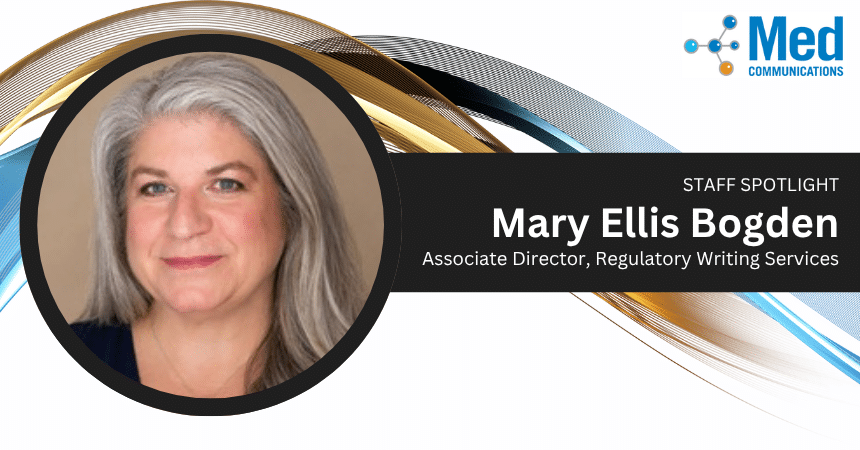
Mary Ellis Bogden joined Med Communications earlier this year as Associate Director, Regulatory Writing Services. When it comes to navigating complex regulatory pathways and bringing therapies closer to patients, few…

The Common Technical Document (CTD) is the foundation of regulatory submissions worldwide. While many view it as a collection of documents, regulators see it as one integrated story supporting a…

Many sponsors think of regulatory writing as a series of individual deliverables. A protocol. An Investigator’s Brochure. A clinical study report. A briefing document. But health authorities don’t review these…

Clinical protocols are being redefined, and ICH M11 is leading the shift. The introduction of ICH M11 and the Clinical Electronic Structured Harmonised Protocol (CeSHarP) template provides a global standard…

China’s biotech boom is transforming global drug pipelines, and in-licensing these innovative assets is opening exciting new opportunities. But here’s the challenge: great science alone doesn’t win FDA or EMA…
The global focus on obesity has never been stronger. This complex condition is now one of the fastest-growing global health challenges, impacting hundreds of millions of people and reshaping the…
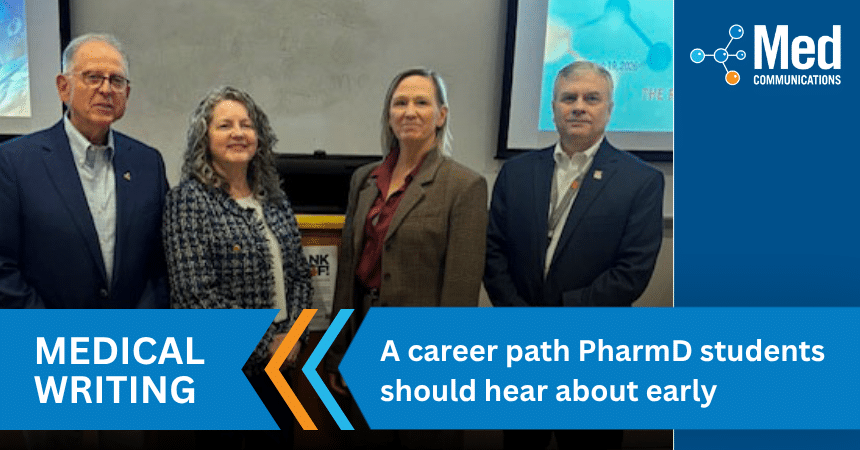
Recently, Med Communications had the opportunity to introduce PharmD students at the University of Tennessee College of Pharmacy to medical writing through a one-hour guest lecture. The session kicked off…
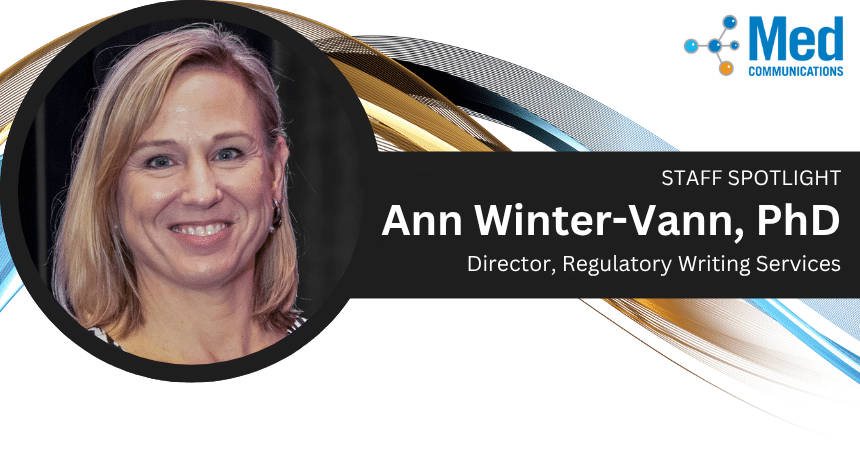
Med Communications’ newest service area, Regulatory Writing, offers support across all stages of clinical drug development: Under the leadership of department director Ann Winter-Vann, who has more than 18 years…
Our newest department, Regulatory Writing, is led by Dr. Ann Winter-Vann. Ann received her PhD in Molecular Cancer Biology from Duke University, where she was supported by a fellowship from…